Nigerian Hijabites
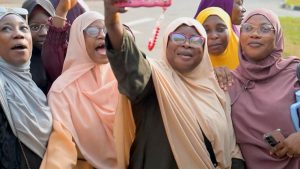
Nigerian Muslims women joined their counterparts across the world to celebrate world Hijab Day.
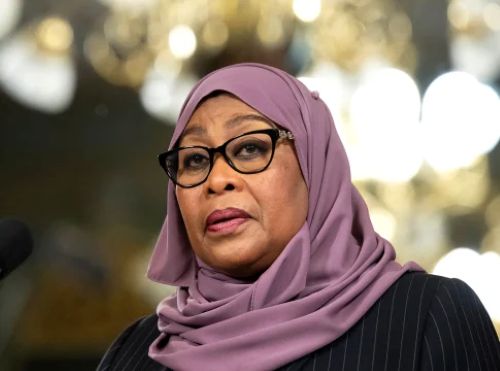
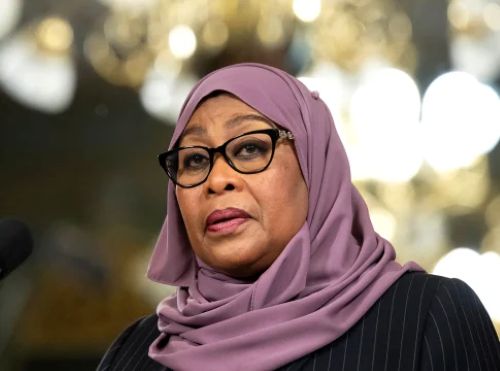
Nigeria’s First Lady Oluremi Tinubu, used the occasion to call for mutual respects of the citizens’ choice of faith or religion.
In a message commemorating the day, Mrs Tinubu commended Muslim women for identifying with the unique mode of dressing.
The First Lady said the diversity of the nation should be embraced by all as a source of unity among Nigerians.
She said: “On this World Hijab Day 2026, with the theme, ‘Unity in Hijab,’ I celebrate the beauty of choice, faith, and identity of Muslim women.
“The hijab is a symbol of obedience, dignity, strength, and worship for many women, and a reminder that our diversity is a source of unity, not division.”
The First Lady enjoined Nigerians to continue to respect the religion of one another and embrace peaceful coexistence for the growth of the nation.
“As a nation, may we continue to embrace mutual respect, peaceful coexistence, and solidarity across all cultures and beliefs. Together, we are stronger. Happy World Hijab Day,” she added.
Hijabites Rally In Lagos
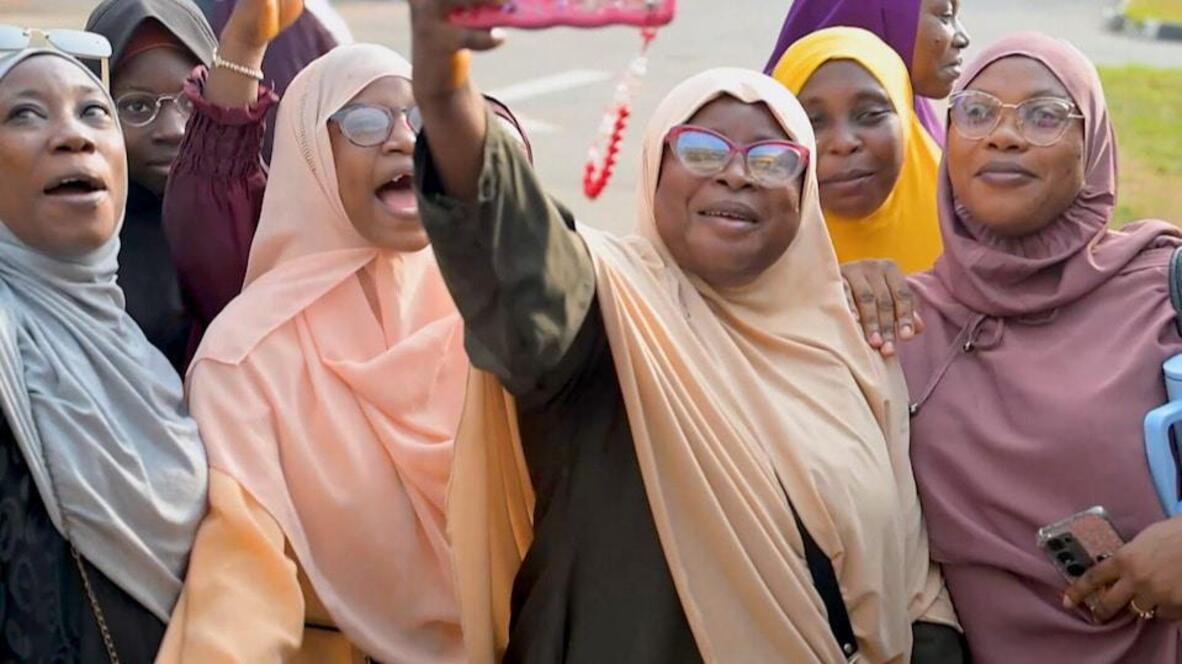
Dozens of Muslim women and civil society activists took to the streets of Lagos to participate in the ‘Walk for Hijab‘ march marking World Hijab Day.
Muslim Women and young girls participants singing and holding placards with slogans among others reading: ‘I cover my head not my brain’ and ‘Hijab is our crown not a crime’.
“It is globally accepted that we can wear the hijab because of religious tolerance. It is our right. We are covering our heads, not our brains. The hijab provides the dignity to honour a woman,” said Hajia Riskiah Adam-Adedimeji, a member of the Association of Muslim Women in Business and Professions (AMWBP).
“We are not idiots. We are not just covering our heads; it is an injunction from Allah that we should wear the hijab. And this is what we are doing,” added a second participant, Hajia Dhikirah Matesun-Oshodi.
Legal practitioner Musbau Adewale Oyefeso, former president of the AMWBP, highlighted the societal benefits of supporting the right to wear the hijab, noting it as ‘a gain for any government’.
“They will not be unduly exposed, and they will remain focused on their education, as Western styles of dressing can often distract the average Muslim girl,” Oyefeso said.
World Hijab Day is an annual global event held on February 1, promoting religious tolerance. Founded in 2013, it aims to challenge stereotypes and stand in solidarity against ‘hijabophobia‘.
Not About the Clotting Only
The Hijab is not merely a cloth to Muslims, but a way of life of faith, honour and belonging. Hijab is a term of Arabic origin that derives from the Arabic root h-j-b, which is a verbal form meaning cover or shield.
Although most individuals would relate the Hijab to clothing, there is much more to it than the physical look.
It shows a spiritual bond between a Muslim woman and Allah and her choice to live with decency and with self-respect.
To millions of Muslim women worldwide, the Hijab is a constant demonstration of their religion, a statement of identity of what they are and what they believe in.
With trends being a catalyst of the modern world, the Hijab is a classic symbol of religious faith and moral power.
The Hijab as an Expression of Faith
The first and most important role of the Hijab in Muslim identity is that it represents obedience to Allah’s command. The Holy Quran clearly mentions the principle of modesty for both men and women:
“And tell the believing women to lower their gaze and guard their chastity and not to display their beauty except what is apparent thereof, and to draw their veils over their bosoms.” (Surah An-Nur, 24:31)
Wearing the Hijab, a Muslim woman willingly makes her life choices in line with the divine regulations. It turns into a kind of ibadah (worship), a kind of daily reminder of her faith and spiritual boundary, which helps her sustain her relationship with Allah. The Hijab does not coerce her, but is her decision in itself, that is, it is an act of conviction rather than coercion.
Identity in a Diverse World
Nowadays, personal identity is formed by beliefs, values, and apparent signs in the global and multicultural society. The Hijab is important in creating and maintaining Islamic identity amongst Muslim women. It identifies them as the Islam adherents and gives them a silent but very effective message of faith everywhere they are.
By wearing the Hijab, a woman publicly informs herself as a believer. This exposure may be empowering and challenging. Empowering – since it will enable her to live honestly, not concealing her ideologies.
Difficult – since she can experience bias or confusion. However, despite such obstacles, there are still numerous Muslim women who wear the Hijab with pride proving that their sense of faith is more powerful than the social pressure to conform.
The Hijab as a Symbol of Empowerment
Hijab is not the symbol of oppression as it is commonly believed. Instead, it is a statement of freedom of the unrealistic beauty ideals of society. In a world where women are mostly evaluated based on their looks, the Hijab enables a woman to be assessed based on her wisdom and personality rather than her physical attractiveness.
It is their own choice – a voluntary denial of objectification and a way to say that they determine their value. The Hijab is therefore a form of empowerment to them, that makes them feel better and asserts their dignity.
Hijab and Cultural Diversity
The Hijab has no single colour, design or tradition. Whether it is the abaya of the Gulf or the dupatta of South Asia, or the turban-like Hijab of Africa and Europe, Muslim women in various parts of the world express their religion, the way they do so being in a variety of modest clothing.
These differences show that Hijab is not about uniformity but about intent. It is the same goal, but the same goal: modesty, faith, and respect. The Islamic religion is beautiful in the sense that it gives some flexibility in terms of culture without sacrificing the universal factor of modesty.
By doing so, the Hijab brings Muslim women on board in other continents. It brings them together with a common religion and honors their cultural diversity, which brings a powerful global Muslim identity.
Hijab in the Face of Stereotypes
However, regrettably the Hijab has been misinterpreted by other societies, which are not Muslims. It is even regarded as a symbol of retrogression or repression. These stereotypes are based on misconceptions as a result of media discrimination or political interests.
But Muslim women all over the world are busy transforming this story. Doctors, engineers, athletes, entrepreneurs and many more are examples of women who wear the Hijab and have been successful in all their careers, thereby validating the misconception that Hijab restricts progressive growth. Rather, it demonstrates that religion and work life may go hand in hand.
Once the Muslim woman is successful wearing the Hijab, she is not only becoming a spokesperson on her own behalf, but also enhancing the perception of Islam to others. The success of her da’wah is a silent invitation to understanding the faith.
The Spiritual Impact of Hijab
There is also a profound spiritual enigma attached to the Hijab, in addition to identity and empowerment. It reminds the believer that she is here to live a life that is pleasing to Allah. It breeds humility, patience and self-discipline – these are the core of Islam.
The wearing of the Hijab makes a woman conscious of her actions, words and communication. It stimulates her to be pure inside, to have modesty outside. So, Hijab is not only an outward performance, but it is a manifestation of inner spirituality.
Men’s Role and Responsibility
Talking about Hijab cannot possibly be complete without referring to the role of men in Islam. The Quran commands men to lower their gaze first and then women to wear Hijab. The concept of modesty is a duty in Islam. Men should honor women, check their conduct and make a society where women are allowed to practice their faith without fear and reproach.
When men meet their obligation, the atmosphere of modesty is full – balanced, respectful and safe to each.
Hijab in the Modern Era
The Hijab still continues to be worn in a fashionable way in the modern world, but not losing its spiritual value. With the emergence of social media, modest-fashion influencers have appeared who unite faith and creativity and demonstrate that it is not opposites to be modern and modest.
Muslim women are showing the world every day that Hijab fits the modern lifestyle, whether they are on the international runaway or classrooms and offices. They put it on their shoulders, and they balance between education, work, and religion and show that the real identity is not imitation, but devotion.
A Mark of Honor and Devotion
The Hijab has been a classic symbol of faith, modesty, and identity. It links Muslim women to their Creator, community and their conscience. Bravery, honor and faith are in every corner of the cloth.
According to Noor Fatima, an Islamic blogger , Wearing a Hijab means to say that I am part of Allah. It is to walk in faith even though the world does not understand. The Hijab is not just some cover, it is a crown – a symbol of pride that characterizes the Muslim woman and her gorgeous association with All.
Sources : Viory/NTA/VON/YouTube
About the Author