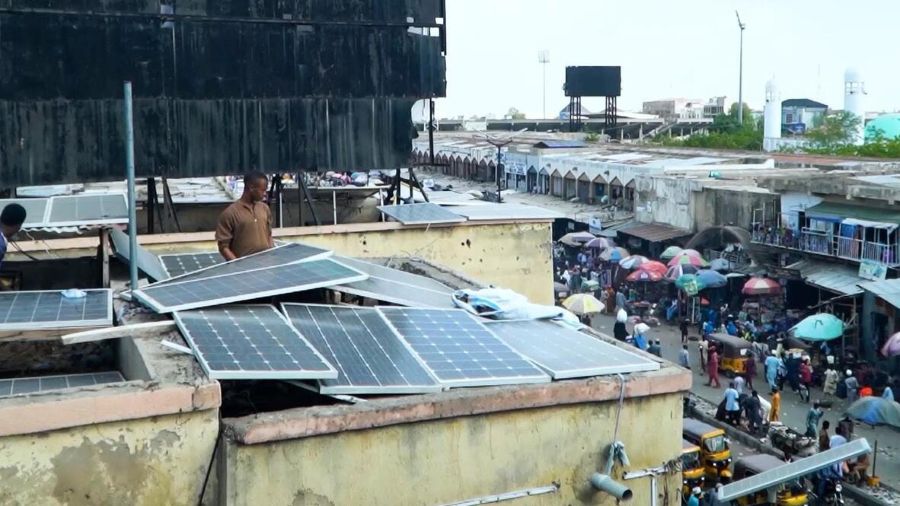
Kano Market Solar Panels on Roof tops
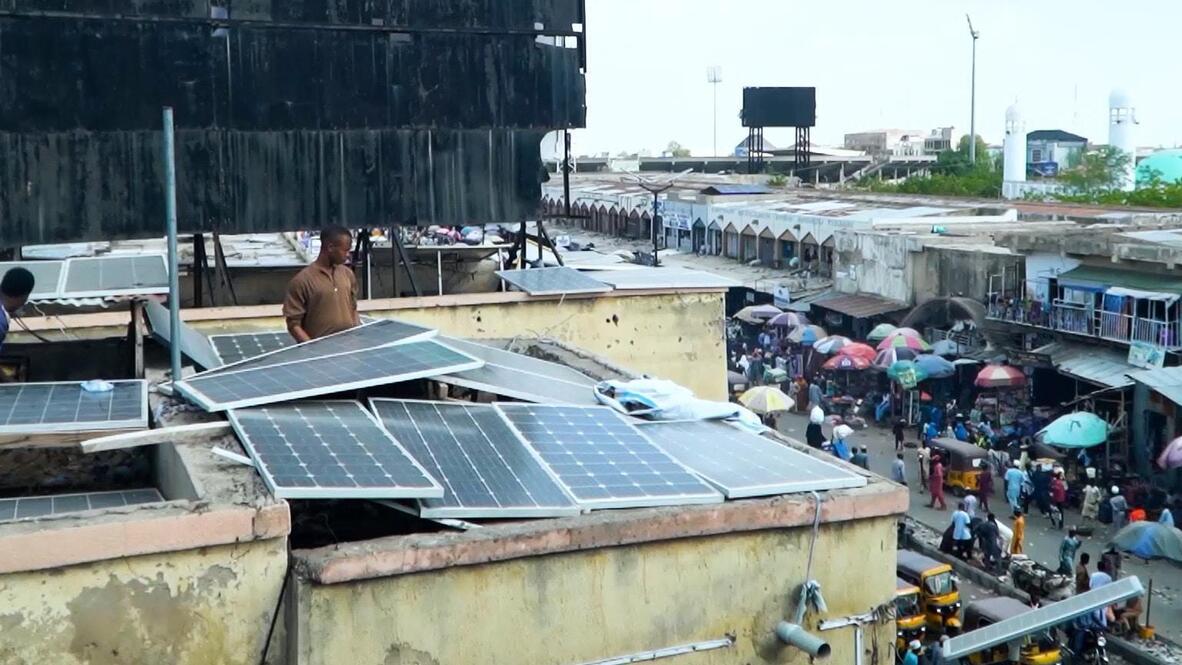
Nigerian traders in Kano, Northwest of the country are now embracing the Solar energy to power their business as a result of high cost of fuel and public power supply outages.
For shop owners in Kano, solar power is no longer just a backup. It is becoming the difference between staying open and losing customers to heat, darkness, and fuel costs.
Solar panels are spread across rooftops in the northern Nigerian city, while inside a shop, ceiling lights glow from power stored in an inverter battery.
Shop owner Sani Shehu says unreliable grid power and rising fuel costs have made business harder.
“As a businessman who welcomes customers from different places, my shop used to be poorly lit and very hot for customers. Even when we had generators as an alternative to government-regulated power supply, the cost of fuel was really high, despite the fact that power supply from the government-regulated source was never regular. However, now with the solar-powered electricity, we have constant electricity,” he noted.
Kano is one of Nigeria’s main commercial centres, where long power cuts can hit small traders, workshops, and households simultaneously.
Solar supplier Maryam Ibrahim says demand in Kano is being driven by poor power supply and pressure on household and business budgets.
For many residents, panels, batteries and inverters offer a way around a grid they say remains too unreliable.
While the switch means paying more upfront, users say it can be easier to manage than repeatedly buying fuel or paying monthly electricity bills that may not arrive when needed.
Cheaper And Efficient
“It is cheaper and very efficient but requires an initial lump sum, which is still better than government regulated electricity that comes with monthly bills. With solar, one is exempted from paying monthly for epileptic electricity, which is what we used to get before switching to solar,” noted Nurulhaq.
Nigeria has promoted renewable energy projects to expand power access, including solar mini-grids and standalone solar systems.
Source/ Viory
About the Author