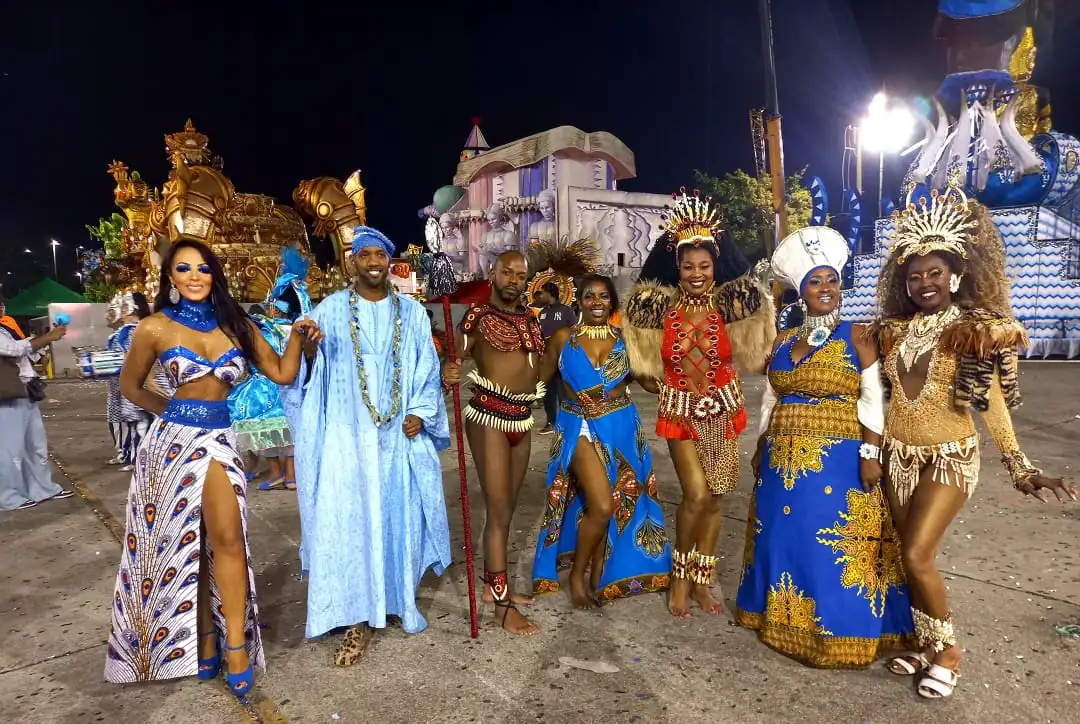
If you dey think say Rio Carnival na just samba, sequins, and big feathers, di 2026 edition don come teach everybody a lesson wey dem no go forget in a hurry.
Dis year, one of di most powerful and moving performances to ever grace di Sambadrome na di one wey carry di spirit of Yoruba culture and di ancient, sacred Ifá tradition straight from di heart of West Africa into di heart of Brazil biggest celebration. And e land like thunder.
Di Night Africa Took Over Rio
From di moment di samba school enter di Sambadrome, e dey clear say something different dey happen. Di energy wey follow dem inside na different kind of energy — e no be just excitement, e be reverence. Di colours were deliberate and deeply symbolic — deep greens, golds, and whites wey carry di signatures of di Orishas, di powerful spiritual beings wey sit at di very centre of Yoruba belief and cosmology. Every shade, every fabric, every feather get meaning. Nothing dey there by accident.
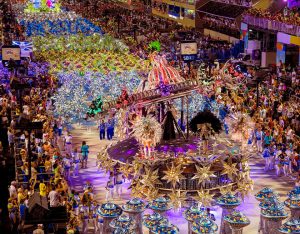
Di floats were breathtaking. Each one tell part of a story — di story of a people wey were forcefully removed from dia homeland through di brutal transatlantic slave trade, wey cross an ocean in chains, and wey still — against every odd and every cruelty — manage to carry dia culture, dia religion, dia language, and dia identity with dem into di new world. Dat story dey heavy. And di crowd for di Sambadrome feel every bit of dat weight as di procession move past dem in a blaze of colour, sound, and spiritual power.
Ifá Take Centre Stage
Ifá, di sacred divination system of di Yoruba people, wey UNESCO don already recognise as Intangible Cultural Heritage of Humanity, take centre stage during di performance in a way wey nobody wey dey present go ever forget. Dancers representing Babalawos — di high priests of Ifá — move through di arena with a grace and spiritual intensity wey silence parts of di crowd before di music swell again and everybody begin shout as one.
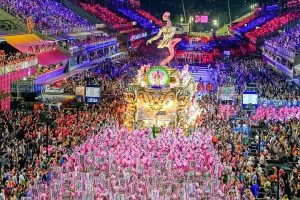
Di drums were talking. Not just playing — talking. Every beat was a word, every rhythm was a prayer, every pause was a breath from di ancestors demself. Those wey understand di Ifá tradition say dem could feel di presence of something beyond di performance — as if di Sambadrome, for dat night, become sacred ground.
Di intricate beadwork, di ceremonial staffs, di ritual colours associated with specific Orishas like Obatala, Shango, Oshun, and Yemoja — all of dem appear with accuracy and reverence dat show say di samba school do serious research and engage deeply with Yoruba cultural custodians before dem put dis performance together. Dis na not a costume party. Dis na an act of cultural restoration.
Di Deep Roots Between Brazil and Yoruba Culture
Dis connection between Brazil and Yoruba culture no be accident or entertainment gimmick. E dey rooted in centuries of painful, complicated, and ultimately triumphant history. Millions of Yoruba people were enslaved and transported to Brazil — particularly to di state of Bahia — and even in di most brutal conditions of captivity, dem refuse to let dia culture die.
Dia religion survive under different names and different faces, adapting to survive but never losing im essence. Candomblé, di Afro-Brazilian spiritual tradition wey dey practiced across Brazil today, carry di same spiritual DNA as Yoruba traditional religion. Di Orishas wey Yoruba people worship in Ile-Ife and Lagos and Ibadan are di same beings wey dey honoured in Salvador and Rio and São Paulo — just wearing different clothes and answering to slightly different names.
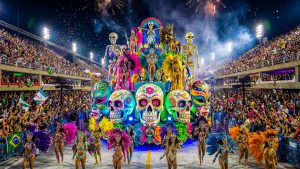
Dia language leave traces in Brazilian Portuguese. Dia food — from acarajé to moqueca — become part of Brazilian national cuisine. Dia music weave itself so deeply into di fabric of Brazilian sound dat you cannot separate di two without destroying both. Samba itself, di heartbeat of Rio Carnival, carry Yoruba and Bantu African rhythms in im very DNA.
Why Dis Performance Dey Different
Plenty carnival presentations don reference African heritage before — but wetin happen for di Sambadrome for Rio Carnival 2026 dey different in a way wey matter. Dis performance no just reference African culture from a distance, e immerse itself completely inside am. E no treat Yoruba tradition as exotic backdrop or colourful decoration — e treat am as living, breathing, sacred truth wey deserve di full respect and full platform of one of di world biggest stages.
By bringing Ifá to di Sambadrome in 2026, di samba school do something profound and historically significant — dem return di story to di source, honouring di ancestors while showing di entire watching world say African tradition no dey just alive, e dey thriving, e dey beautiful, and e get di power to move millions of people to tears and to joy and to goosebumps — all at di same time.
How Di World React
Social media don explode. Clips of di performance spread across Instagram, TikTok, X, and YouTube with speed and reach wey show say di moment touch something universal. Nigerians and Yoruba people from across di diaspora react with a pride wey dey almost impossible to put into words. People dey cry. People dey share di videos with captions wey say tins like “dis na for di ancestors” and “Africa never left” and “Yoruba culture don conquer di world stage.”
Buteco do Samba | BEIJA-FLOR 2026 – CLIPE OFICIAL RIO CARNAVAL
Cultural scholars, anthropologists, and Africans studies academics don begin write about di performance as a landmark moment in di ongoing global conversation about African heritage, diaspora identity, and di long arc of cultural survival and renaissance. From London to Lagos, from New York to Nairobi, from São Paulo to Sydney — di response dey unanimous: wetin happen for di Sambadrome for Rio Carnival 2026 na something special.
About the Author