Cocoa Pods in Ivory Coast
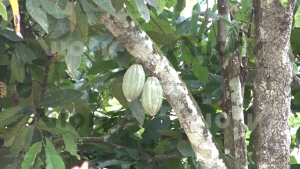
Cocoa producers and experts in the Cote d’Ivoire’s city of Abidjan have called for stronger price negotiation of the product in the global market.
Daleba Nahounou, is a Member of Young Volunteers for the Environment (JVE) organisation. He send these posers
“Isn’t it time to imagine a model that directly connects producers and buyers?” “Isn’t it also time to invest in local cocoa processing?
“When we depend on the international market and prices fall, it is the farmers who suffer,” .
“And when prices rise, they still do not benefit, because of the fixed price set by the state. Yet that price should guarantee farmers’ dignity and allow them to live from their work.”
One of the Word’s Producer of Cocoa
Cote d’Ivoire provides roughly 40 percent of the world’s cocoa but still has limited influence over global pricing – and has seen a big hit from price volatility, with farmer incomes also impacted.
Experts and civil society groups argue that the solution lies in structural reform, including local processing, regional co-ordination and stronger African leverage in global pricing, to shift Cote d’Ivoire from raw supplier to stronger price negotiator in the global cocoa economy.
The crisis has intensified since late 2025, when global prices dropped sharply, with stocks building up across co-operatives and ports. Authorities launched the Coffee-Cocoa Council, a buyback plan worth hundreds of billions of CFA francs to absorb unsold cocoa and prevent a broader social crisis among farmers – but the plan hasn’t completely worked out.
“The Coffee-Cocoa Council, which was supposed to regulate the marketing process, was overwhelmed, and we found ourselves in a state of confusion that required State intervention,” Nahounou concluded.
Some multinational buyers to delay or refuse purchases of remaining cocoa volumes. Estimates suggest roughly 123,000 tonnes of cocoa have remained unsold in some regions, leaving many farmers unpaid for weeks.
Cocoa farmer Marie Konan exclaimed
“We are suffering a lot. Now we can no longer sell our stocks. Either we accept consignment sales, or we store the cocoa at home. And if it is not properly stored, mould develops,”
Source: Viory
About the Author