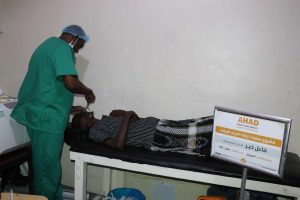
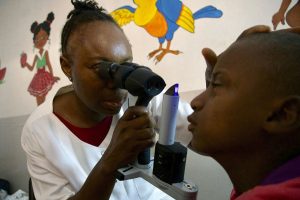
The Ahmadiyya Eye Center , under the auspices of Masroor Eye Institute, in Burkina Faso has conducted Eye Surgeries for the people.
Under the supervision of the Humanity First USA Gift of Sight in Africa, the surgeries were done by Ophthalmologists within and outside the continent.

Masroor Eye Institute
Burkina Faso is one of the country that has greatly benefitted from the Nusrat Jahan Scheme. In Burkina Faso, eye clinics have been run by the Ahmadiyya Muslim Community, and its auxiliary organisation Majlis Ansarullah (Ahmadiyya Elders Association) has historically been supporting this scheme through Humanity First.
On the 75th anniversary of Majlis Ansarullah, a pledge of £500 000 was made to the Fifth Caliph and Worldwide Head of the Ahmadiyya Muslim Community, His Holiness, Hazrat Mirza Masroor Ahmad (aba), to be used for any project in the world.
His Holiness (aba) advised that this donation should be used to establish a purpose-built eye institute in Burkina Faso.
It is estimated that 2% of the total population, or 340.000 people in Burkina Faso suffer from blindness. According to the rapid survey of Avoidable Blindness conducted in 2011, 8% of people over 50 are affected by blindness and 17% live with low vision.
Neglected tropical diseases such as trachoma and river blindness are also a major health problem in Burkina Faso.
It is estimated that 16 million people are at risk of contracting one or more of these debilitating diseases which, if left untreated, can lead to blindness.
Furthermore, according to a report from the World Health Organization (WHO) , as of 2017 there were 20.0 million onchocerciasis infections worldwide. Of those who contracted this disease, 1.15 million experienced vision loss. Furthermore, the WHO reports,
‘Onchocerciasis occurs mainly in tropical areas. More than 99% of infected people live in 31 countries in sub-Saharan Africa: Angola, Benin, Burkina Faso, Burundi, Cameroon, Central African Republic, Chad, Republic of Congo, Côte d’Ivoire, Democratic Republic of the Congo, Equatorial Guinea, Ethiopia, Gabon, Ghana, Guinea, Guinea-Bissau, Kenya, Liberia, Malawi, Mali, Mozambique, Niger, Nigeria, Rwanda, Senegal, Sierra Leone, South Sudan, Sudan, Togo, Uganda, United Republic of Tanzania.’
This data from the WHO underlines the urgency of offering quality care to the population in West Africa, and thus preventing millions of people from losing their sight.
Objective of the Institute
The mission of the institute is to create a state-of-the-art facility for patients to receive the highest level of eye-care, serving not just the local population but also that of surrounding countries. The institute will also acts as an educational platform, with on-site and remote learning available for local doctors and nurses. This will help in achieving the goal of a self-sustaining institute by raising the standards of eye care in the coming years.
The institute will benefit from specialists who are able to carry out sensitive eye operations and teach various skills of eye surgery.
To ensure the institute is equipped and staffed to the highest quality, an International Faculty has been established, comprising of leading eye specialists from the Ahmadiyya Muslim Community around the world. Their collective experience which includes previous projects in Africa grants them an understanding of what equipment would be most suitable, and the ability to establish key contacts within the country to help support the project.
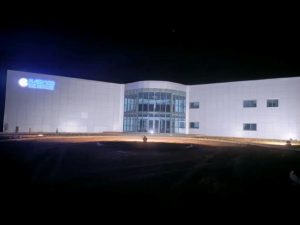
In terms of facilities, it is equipped with 2 operating theatres, 6 consultation rooms, 8 bed wards, 6 private rooms, a pharmacy, a 100+ seat auditorium, a catering area and a large parking lot.
Equipment were sourced from leading manufacturers following extensive discussions with local doctors and the International Faculty that has been established for this project.
Construction Progress
The build completion was delayed by the Covid-19 pandemic. By the end of the 2012 all equipment were installed and the staff recruited to start clinical activity.
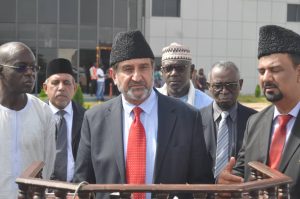
According to the guidance from the World Head of the Ahmadiyya Muslim Community, Hazrat Masroor Ahmad, Khalifatul Masih V, the eye institute will also be hosting an Ophthalmology conference for the leading eye specialists in the region as well as local government officials.
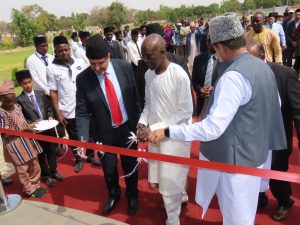
“This Eye Facility will be the best facility not only in Burkina Faso but for the whole of West Africa.’
Read More : Onchocerciasis (who.int)
https://www.who.int/news-room/fact-sheets/detail/onchocerciasis
About the Author