Remembrance of African Soldiers 2
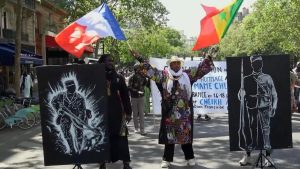
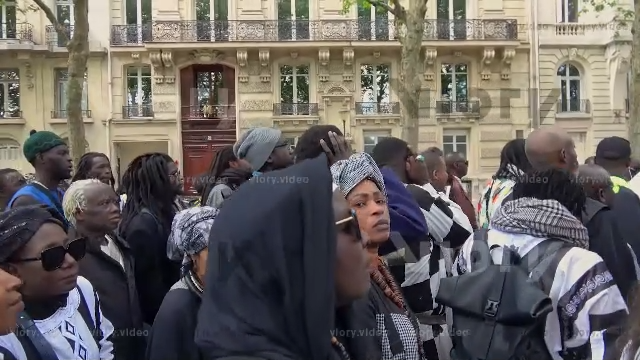
Members of the African community in Paris marched through the streets on Friday to honour the Tirailleurs, forces from Senegal and other African countries who fought to liberate France during World War II.
On the occasion of Victory in Europe Day, the Ambassador of Senegal to France Baye Moctar Diop made an appearance in the procession to show his support.
“I have come to offer my support and solidarity to the Mouride community, which is organising a commemorative event in honour of the Senegalese riflemen,” Diop said.
In the words of Niaina William Rakotozafy, General Delegate of the National Union of Veterans of Madagascar, “We call them the great forgotten ones—the great forgotten ones of World War I, of World War II—these soldiers who came from elsewhere and who, quite simply, also built France.”
Blaize Diagne, who is a son and a grandson of Senegalese riflemen, said the 1944 Thiaroye massacre is a stain on French history.
“We have an entire generation that isn’t aware of it,” Diagne said. “80,000 young men came from all over Africa—Algerians, Moroccans, Senegalese. And the Senegalese Tirailleurs represented 17 African countries.”
He said the French government had still not compensated the families riflemen who fought for France in World War II but were later gunned down at the Thiaroye camp near Dakar.
“Today, all we ask is for the truth to be told, for their families to be honoured . It’s a stain on French history. It dishonours France,” he added.
Down Memory Lane
During the period of direct rule and until France’s African colonies won their independence predominantly in the 1960s, the French West Africa forces served in World Wars I and II.
Tirailleur servicemen came from French-held territories including Senegal, where the force was headquartered, with troops originating from countries including Ivory Coast, Mali, Guinea, Burkina Faso, Benin, Niger and Mauritania.
The Thiaroye massacre took place on December 1, 1944, when an estimate 300 to 400 Tirailleurs were killed by French forces. The troops had been liberated after the D-Day landing and repatriated, having served in the Battle of France in 1940.
In 2014, France’s former President Francois Hollande government reclassified the event as a ‘bloody repression’ and revised the recognized number of deaths from 35 to 70.
However, historians say that the true number is much higher. In 2024, French President Emmanuel Macron recognised the incident as a ‘massacre’ in a letter to Faye, although he stopped short of providing an official death toll, issuing a formal apology or providing reparations.
In February 2025, Senegal’s government ordered archaeological excavations at the Thiaroye site to uncover the full extent of the tragedy, amid longstanding suspicions of mass killings and unmarked graves.
In recent years, several West African countries have cut ties with their former French colonial masters, including Senegal, Mali, Burkina Faso, Niger, Chad and the Ivory Coast.
May 8, 2026, marks the 81st anniversary of Victory in Europe Day, with events around the world commemorating the pivotal moment that ended the war in Europe.
Read More : Africans Cerebrates Orthodox Epiphany Day
Source : Viory
About the Author