Zimbabwe’s rural communities of Bulilima district has received food aid from Russia, working with the World Food Programme (WFP), as rising prices and reduced US funding heightened pressure on vulnerable populations.
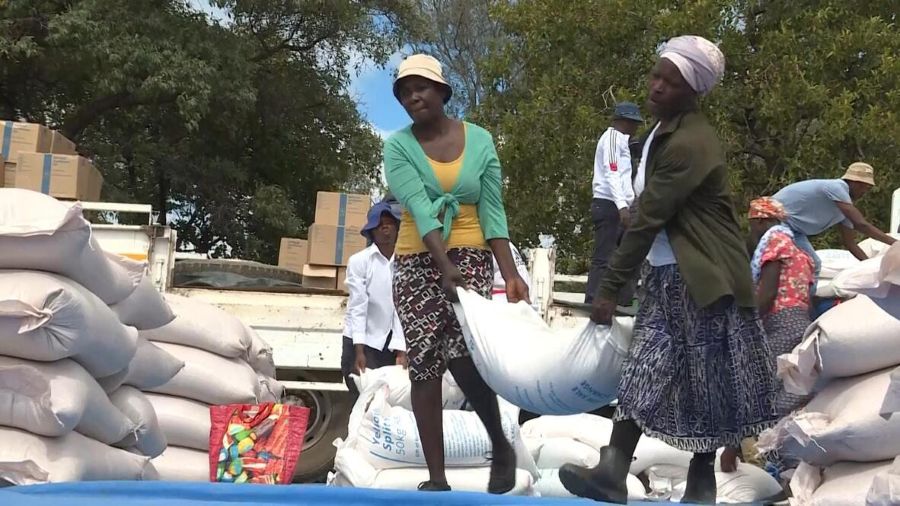
Volunteers in the rural communities collected sacks of food aid and pouring cooking oil into a jar. The beneficiaries after collecting the food, registered at a booth.
Sergey Kuzin, Deputy Russian Ambassador to Zimbabwe, said.“We look forward to increasing bilateral trade with Zimbabwe, primarily in agricultural products and fertilisers, despite unilateral coercive measures imposed on both of our countries by greedy and dishonest people in power in the Western part of the world,”
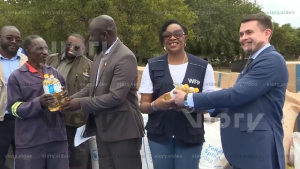
WFP,Russian and Zimbabwean Officials
Food Aid Is Timely
Jane Ndlovu, a beneficiary, said that the donation will ‘go a long way’, adding, “We were starving. Even now, we are still facing hunger. Yes, we had heavy rains, but we harvested nothing.“
63,000 Beneficiaries
According to the Head of External Relations at WFP, Ifeoma Garba, the support will reach about 63,000 people across Bulilima and Kariba districts. Each person will receive a food basket consisting of 7.5 kg of cereal, 1.6 kg of pulses, and 0.6 kg of vegetable oil.
Zimbabweans collecting food aid
WFP Funding Crisis
The WFP faces a severe funding crisis in 2025–2026, driven partly by a significant reduction in US aid, with contributions dropping to $1.5 billion from nearly $4.5 billion the previous year.
This funding gap will force WFP to reduce emergency food assistance, affecting up to 16.7 million people, a 21 per cent reduction from the 79.9 million assisted in 2024.
The Russia Food Aid Programme
Russia provides food aid primarily through humanitarian shipments of grains and fertiliser to Adrica and Asia often collaborating with the UN World Food Programme (WFP) to target vulnerable nations, while simultaneously using these shipments to bolster geopolitical ties in regions where it has military influence. Recent efforts include donating 30,000 tonnes of fertilizer to Bangladesh and supplying grain to nations like the Central African Republic and Zimbabwe.
Key details of Russia’s food aid covers:
Humanitarian Aid to Africa: Russia has pledged to send grain as humanitarian aid to multiple African countries. Recent shipments include 50,000 tonnes of wheat to the Central African Republic.
Fertilizer Donations: The Uralchem Group, with WFP assistance, has donated thousands of tonnes of fertilizer to countries like Bangladesh.
School Feeding Programmes: Through the WFP, Russia has allocated over million since 2005 for school feeding in Tajikistan, supplying fortified wheat flour and vegetable oil.
Geopolitical Impact: Experts suggest these shipments are used to strengthen ties with countries where Russian troops or mercenaries are present.
Internal Aid: Domestically, the Food Bank Rus charity helps over 1 million people in Russia.