Nigeria South Africa Flags

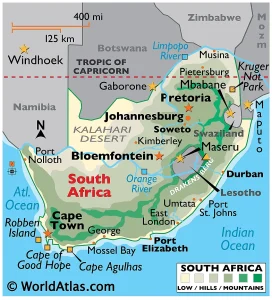
South Africa is fast gaining a fixed, if ironical, notoriety for xenophobia. In the past twelve years, records show that xenophobic attacks by South African youths have targeted so-called illegal immigrants in such industrial urban centres as Pretoria, Durban, Johannesburg, Cape Town, East London, and, amongst others, Pietermaritzburg.
On such occasions, a handful of innocent individuals were killed, promising businesses owned chiefly by Nigerian, Ghanaians, and other Africans were attacked and looted. Naturally, it took late intervention of the police to restore peace.
The situation, by mid-May, had deteriorated that the Ghanaian government wanted to airlift some of its national home.
Xenophobic attacks against foreigners are not helping the post-apartheid image of South Africa: today, potential investors, whose ambitious businesses in the agricultural, transportation, estate development, manufacturing, and waste management – alongside a plethora of impressive value-chain outfits, are having a rethink as to whether Pretoria is where they should pump their millions of dollars.
Truly, no shrewd investors would be comfortable in a milieu where peace – which makes for the boom of business – can easily be dislocated by unpredictable, senseless xenophobic eruption.
And it does appear, as an uncanny given, that without xenophobic trigger, South Africa attracts no international attention, anymore. It actually has taken the record bout of it, which erupted on April 20, 2026, for the international community to focus, yet again, on the domestic affairs of Pretoria with all its negative frills on what is supposed to be a rainbow coalition of non-racial, multi-party, democratic society – one that ought to have blunted, as it were, the ugly memories of nearly five decades of apartheid with the coming to power of the ruling African National Congress in 1994.
As South Africa’s major cities, of Johannesburg, Durban, and Pretoria boiled, recently, Nigerian and Ghanaian business outfits were attacked.
Looting and destruction of property was rife. There was no indication that the police waded in to help matters. The earliest victims were Amaramiro Emmanuel, who was beaten to death by the South African National Defence Force (SANDF), and Ekpeyong Andrew.
While the death toll may have risen, it’s, indeed, disturbing that SANDF was complicit in the death of Amaramiro Emmanuel. Some South African officials, too, by their utterances and disposition, stand accused of fanning the embers of xenophobia.
In response to the ugly development, Abike Dabiri-Erewa, who heads the Nigerian Diaspora Commission (NIDCOM), called on Pretoria to offer protection to Nigerians and other nationals, and their businesses.
In effect, NIDCOM called for immediate enforcement of security in areas where Nigerians live and do business, urging authorities to deploy more police personnel and carry out sustained patrols to prevent further violence;
*Demanded accountability, stressing that the individuals responsible for attacks, looting, and harassment must be swiftly arrested, investigated, and prosecuted to end the cycle of impunity;
*Pushed for structured dialogue, proposing a coordinated safety forum involving Nigerians and South African officials, law enforcement agencies, and community leaders to address tensions and improve collaboration;
*Emphasized non-discrimination, urging South African authorities to issue clear public statements condemning xenophobia and discouraging the violent stereotyping and targeting of Nigerians and other foreign nationals.
Records show that, in 2015, several people were killed and thousands displaced in Durban, a development that drew international condemnation.
In 2017, there were anti-immigrant protests and clashes in Pretoria and Johannesburg. Nigerians protested against MTN.
In 2019, widespread violence against foreign-owned businesses triggered diplomatic tensions between South Africa and Nigeria. Then, President Muhammadu Buhari ordered immediate evacuation of Nigerians from South Africa.
As the crisis raged, President Cyril Ramaphosa reminded the South African youths of the assistance rendered to them by other countries – including the ones whose nationals were being attacked – during the apartheid era.
Antonio Guterres, United Nations Secretary-General, condemned what he called “criminal acts” perpetrated by individuals inciting violence and exploiting socio-economic conditions.
He also reminded those behind the xenophobic attacks that South African’s “struggle against apartheid was sustained through international and African solidarity.”
Guterres’ position was that “xenophobic attacks and acts of harassment and intimidation . . . violence, vigilantism, and all forms of incitement of hatred have no place in an inclusive, democratic society.”
Not so long ago, the influential Zulu king, Misuzulu KaZwelithini, was quoted as saying that foreigners should leave South Africa.
In recent past, shops and other commercial entities, like banks and restaurants, were closed. As of press time, investors in those sectors, and elsewhere, like transportation, were still counting their losses amidst palpable tension – unsure of when the volcano of xenophobia would spit it destructive content.
Since 2015, South Africa, almost with an appropriate tag of the ‘world’s capital of xenophobia’, has lost nearly $8.8 billion to senseless and violent campaigns against immigrants.
In the intervening years, the near absence of a thriving business environment has discouraged the inflow of nearly $9.4 billion in foreign direct investments (FDIs). Africa’s ninth-largest country, with its second-largest economy, South Africa’s unemployment rate is estimated at 33 percent – one of the highest in sub-Saharan Africa.
More than a decade of ill-advised, seasonal volcanic explosions of xenophobic attacks, and high rate of unemployment, in South Africa, are some of the lingering effects of the flagitious, racially induced inequalities created by the captains of apartheid, who assumed power in 1948.
South African youths, who are genuinely aggrieved that the new, post-apartheid society, more than three decades on, does not offer them any hope of improving upon their social status, should interrogate the evils of the apartheid era, if, indeed, they are interested in understanding the harsh realities of today.
Their plight is not, necessarily, to blame on the South Africa’s population of 2.4 migrants from Mozambique, Lesotho, and Zimbabwe.
The unemployed youths who are proud graduates of xenophobic attacks against immigrants would not have offended their fellow Africans, were they gainfully employed in the agricultural sector.
The ANC should be about addressing the lingering socio-economic imbalance, where the white minority who had pressed the myriads of the evils of apartheid against the black majority of 80 percent of the population.
There’s a pressing need for land reforms; black South Africans who are the owners of the country should, in the 21st century, not still be rooted, somewhat hopelessly, in the barren Bantustans, while the white minority, that constitutes about 8 percent of the population, occupies the vast, rich agricultural lands.
It’s a post-apartheid era; such racial inequalities should not be tolerated – if Pretoria, in the years ahead, desires peace.
This Opinion piece was written By Nduka Uzuakpundu
About the Author