China Picture Graduation Ceremony
Qasim Akinreti Ph.D
China is an amazing country. One of the most populous Nations on earth. Populated by resilient, hardworking, steadfast, determined and progressive people. My journey to this far East country has been on mind as a Correspondent of Voice of Nigeria since my early entry into the international broadcasting career.
There was also a prophetic saying in Islam that seek knowledge up to China. My Son had a scholarship to complete his Automobile career in China in 2025. That opportunity of a life time for me surely came in September, 2026.
China uses a top-down and state-directed soft power strategy to shape global perceptions, build political respect, and project influence without relying solely on military or coercive force.
According to chinapower.csis.org, “soft” power, enables countries to persuade or attract others to support their interests. A country’s soft power is heavily dependent upon its global image and international prestige. In the case of China, the central government has developed top-down strategies for enhancing China’s soft power, which in conjunction with public diplomacy, are designed to cultivate a positive international image of China.
Soft Power Model
China must have studied the soft power model of the West appropriately, twik it, refine it and come up spectacularly with its own version. China Aid has taken over from USAID and the British DFID. Confucius Centers compete with the British Council, Alliance France, Goethe Institute, and USIS,
In the early 1990’s China first began to get interested in soft power. By the mid-2000s, perhaps 2007 when then-President Hu Jintao gave a speech and linked the rejuvenation of the Chinese nation to the ability of China to deploy soft power.
Five key areas of development have and currently been used by China to deploy it soft power. These are Economic and Infrastructure diplomacy, Education and Language, Cultural and Digital exports, Medical and Crisis Diplomacy, finally global Media and Influencer Outreach.
The economic and Infrastructure diplomacy were quite noticeable across Nigeria’s transport sector in terms of railways and roads construction. The rehabilitation of the Nigerian railway networks and numerous road construction across the country by the China Civil Engineering Company, CCEC, says it all. China Trucks have taken over Nigerian haulage systems. While Kingsway, Challeram Stores have faded away, there are China retail Shops or outlets in major Nigerian cities.
In the area of education and Language, China has up the ante. The robust relationships with the Nigerian higher institutions and scholarships programmes made the difference. University of Lagos and others have a Confucius Center. Yaba College of Technology got 21 scholarships for its final year Mechanical Engineering students.
Cultural and Digital exports perhaps were icing on the cake. China Cultural centers in Lagos and Abuja are beehive of activities on cultural promotions and exchange programmes. China Phones models compete favourably with iPhone, Samsung, and Nokia among others products. Nigerian hive a sigh of relief matching with the digital technology from China with ease. We chat is a household digital app. What other social media platforms offers you are prominent on We chat. Thank goodness Lekeleke app, a Nigerian app by Chief Nduka Obaigbena joined the digital app race for good.
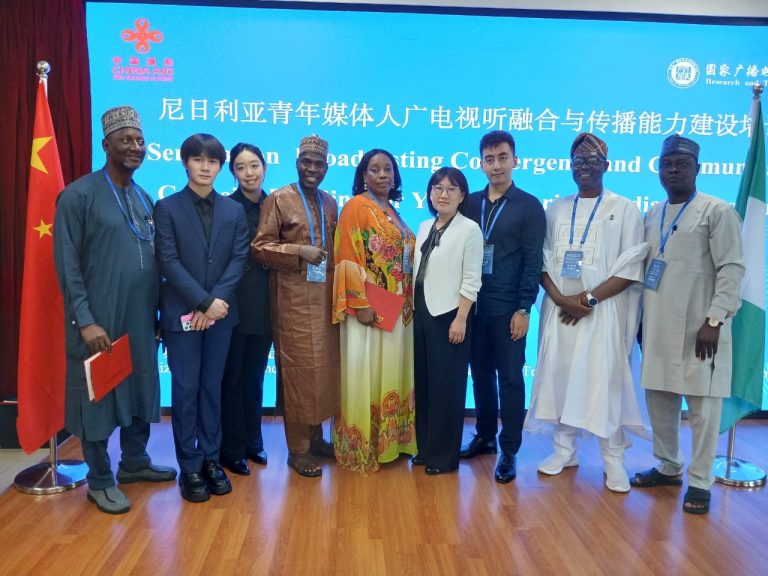
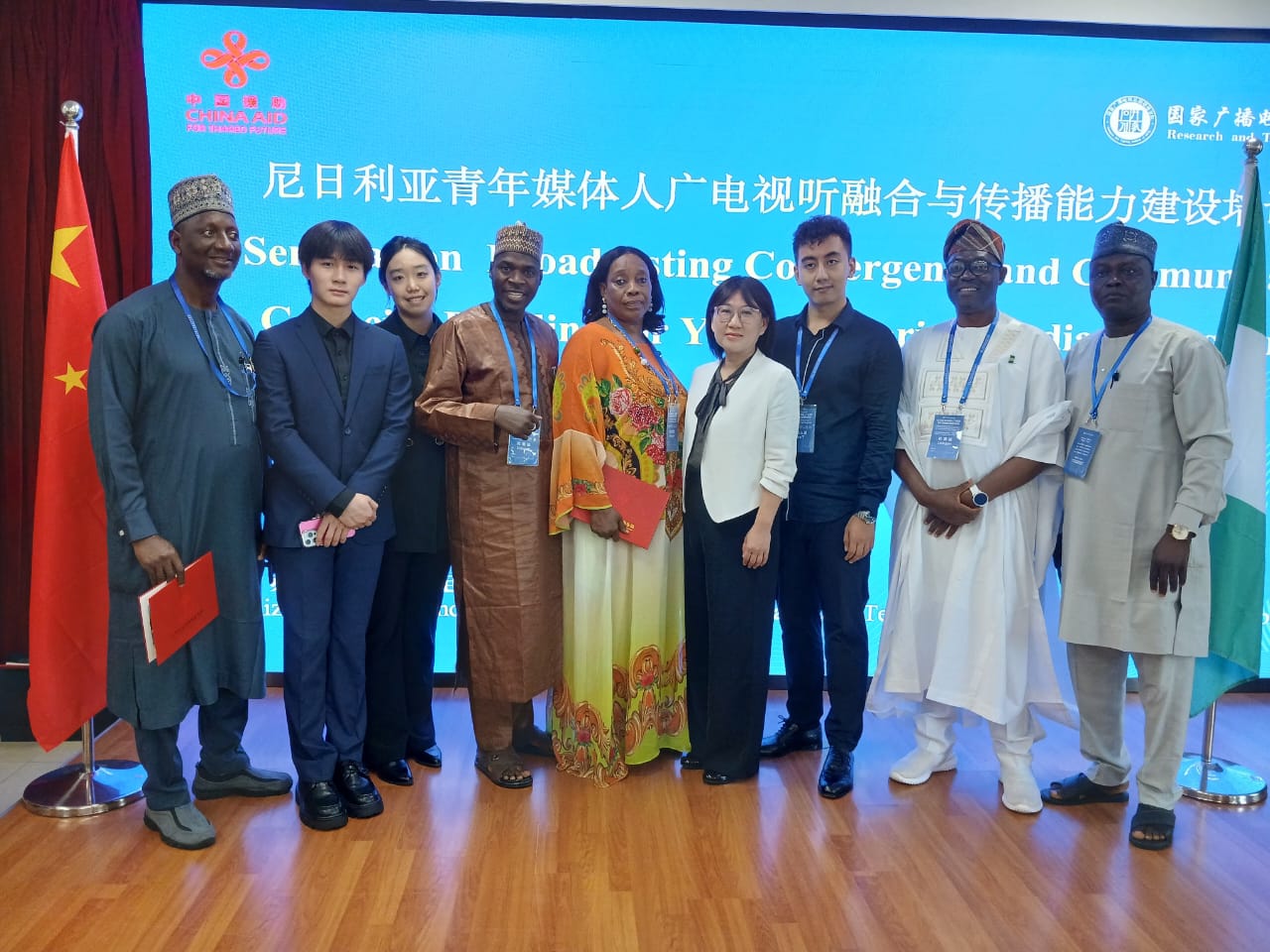
The effective deployment of soft power was quite emphatic in vote of thanks remarks on behalf of Nigerian Journalists at the closing ceremony 2026 media training cohort at the Research and Training Institute of NRTA, Beijing from September 9th to 23rd.
China Media Group
I will delve much into global Media and influencer outreach extensively. China Media Group (CMG), also known as the “Voice of China,” is the primary state-owned media conglomerate for radio and television broadcasting in the People’s Republic of China.
Founded on March 21, 2018 with Headquarters in Beijing, and led by its President Shen Haixiong, has direct supervision and control of the Publicity Department of the Chinese Communist Party. CMG was formed with the merger of major state broadcasters such as lingua-sinica.org CCTV (China Central Television) CNR (China National Radio) CRI (China Radio International) CGTN (China Global Television Network). It operates dozens of television channels and radio frequencies (including CCTV free public channels, CGTN foreign language networks, and digital/pay channels).
It broadcasts globally in over 40 languages and recently launched the 2027 Brand Strengthening China Project and expanded global programming showcases.
My first encounter with CMG was at the 2024, African Broadcast Union, AUB Conference in Abuja, Nigeria. By 2025, CMG joined the AUB in Cote D’ivore, Abidjan capital along with MTA International. CMG entry was extraordinary, serving as China’s primary instrument for soft power, infrastructure development, and “development journalism” across the continent. Its footprints were noticeable in four areas of media influence. Institutional Integration and partnerships, Direct -to Consumer broadcasting, media infrastructure and the Digital Switch Over,Co-opting and training journalists.
These strategies were overwhelming, joined the AUB, operate African link portal, which allows 160 media agencies across the continent to directly upload and share contents. It equally had it strategic headquarters in Nairobi, Kenya with hubs in Lagos, Cairo and Johannesburg, the African media centers. CGTN Africa broadcasts in English and African languages were topnotch.
News and Current Affairs programmes such as Africa Live, Talk of Africa and Global Business Africa have given BBC, VOA, RFI, Aljazeera, and Russian TV International networks a close chase. The XINHUA partnership with Voice of Nigeria, VON and NAN, among others, StarTimes Alliance which commercializes the African digital television market, supplies satellite dishes to rural African homes and the technical exchange initiatives were masterstrokes.
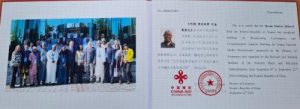
Following series of Memorandum Of Understanding, MOU’s amongst the federal Ministry of Information and National Orientation its media agencies and parastatals namely (Voice of Nigeria, VON, Federal Radion Corporation of Nigeria, FRCN, News Agency of Nigeria, NAN, Nigerian Television Authority, NTA, and National Broadcasting Commission, NBC), with the Chinese Media Group, Chinese News Agency, Xinhua, and bilateral cultural discussions with Chinese Embassy in Abuja, a two week training programme and media facility tours were organised in Beijing, China for 26 media practitioners and regulators at the National Radio and Television Authority, NTRA, Research and Training Institute, 88 Nanchen Road, Beijing, China.
The participants from Voice of Nigeria are: Qasim Akinrei, PhD, Head Digital Media, Ugonma Cokey, Head Training Department, Engineer Ismail Imran, Head of Engineering Department, Mr. Muhammad Danbuama, Head Legal Department and Mr. Akafta Waziri, Public Affairs Unit in the DG’s Office.
Ahead of the departure to Beijing China, a pre visit briefing on Seminar on Broadcasting Convergence and Communication Capacity Building for Young Nigerian Media was held at the Chinese Embassy in Abuja.
Mr. Zhou Hongyou, Charge d’ Affaires of the Chinese embassy in Nigeria based in Abuja led the discussions among other staff of the embassy. He gave a brief remark. This was followed by a short speech by representatives of Chinese Ministry of Commerce, Cultural Attache on the training plans and programme expectations.
Participants were urged to be good ambassador of Nigeria and write news reports/stories on the entire experiences in their various media outlets. 2 representatives from each of the agencies selected for the trip equally spoke on their expectations from the seminar. Qasim Akinreti, PhD and Mrs Ugoma Cokey, spoke on behalf of VON participants.
A presentation of the China Beautiful landscapes was presented to the leader of delegation from various media organisation on the trip. Group photograph was also taken and discussions of the dates of travel to and return from Beijing.
The participants left Nigeria on September 7th and 8th from Abuja, had a stopover in Addis Ababa, Ethiopia arrived Beijing on September 8th and 9th.
Opening ceremony for the seminar began on a diplomatic note. Mr. Liu Linhai, Vice President, Research and Training Institute of, NRTA, Shang Quifen Senior Editor, Research and Training Institute of NTRA, Guo Shengyang, Deputy Director of Training, NTRA, and Ms. Sherry Team Lead. Kayon, Faust and Mary Hlou were interpreters.
The training and seminar were divided into two. The lecture, professional practice and study tours.
Seven lectures featuring on the following topics were delivered at the training center of NTRA. The topics are:
- Xi Jinping’s Cultural Thought: Basic Over view of Radio and Television in China and International Cooperation and Exchange delivered by Yang Youg, Deputy Director General NTRA.
- Telling the Story of Chinese Modernisation: Global News Observation Perspectives and International Communication Practices- A Case Study of Xinhua News Agency presented by Wang Hongjiang Senior Journalist with the Xinhua News Agency.
- Poverty Alleviation Narratives Driven by Media Convergence: Media Empowerment in Chiana’s Support for Africa Poverty Reduction – Wang Hongjiang Senior Journalist with the Xinhua News Agency.
- The Integrated Development and Applications of Broadcasting and HD Television Technologies facilitated by Liu Chenming, anchored by Shang Quifen, Senior Engineer Academy of Radio and Television Sciences, NRTA.
- China’s National Conditions: A Cultural Perspective. Hong Li of the Communication University of China leads the presentation.
- Chinese Culture in the Omnimedia Era: A Case Study of New Media Short Video from Professor Hong Li, of the Communication University of China.
- China’s News Reporting and Communication Practice, Zhang Weiwei an Associate Professor from the University of Chinese Academy of Social Science provided deep insights
We have nine professional practices sessions covering the following areas, Visiting Beijing Zhongke Wenger AI Science and Technology Company Ltd for hands on training and gaining insight into full stack products, the Taosi Site Museum to conduct converged media filming practice, learn integrated television and audio narrative techniques for historical and cultural themes and capture on site visual footage, the Linfen Micro-Short Drama Bae ( one of the five major micro short drama bases in Shanxi province) to learn about media convergence through new audiovisual formats and practical approaches for global outreach through short videos and micro-short dramas.
Others include Converged media reporting project focused on distinctive local industries, carry out practical project on integrated television and audio-visual communication at the Xiangning Ecological Cultural Demonstration Zone, Zisha Clay Intangible Cultural Heritage Workshop in Changning Town, Xiangning County, Linfen City, Conduct field practice at the Xiagning Wine Grape Cultivation and Processing Base.
Under the guidance of professional supervisors, conduct investigations and practical field studies in Fengnanyauan (an underdeveloped area), Linfen City and Conducting filed filming practice, study the audio-visual presentation pf ancient architectural culture.
This allowed participants to learn how documentary cinematography conveys the distinctive features of ancient architecture and explore diverse approached to the audiovisual expression of cultural heritage.
These professional practice activities were led by Shang Quifen, Senior Editor at NTRA, Ouyang Feifei of Director of International Exchange Division, Shanxi Provincial Radio and Television Bureau.
Cultural Exchange Programmes
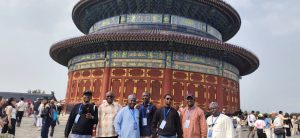
VON delegates participated in five cultural exchange programmes across Beijing and the Shanxi province. In Beijing, the capital there were visits to the iconic Great Wall of China and the Temple of Heaven reserved for very important personalities like the US President.
Shanxi province is home to the, Taosi Temple, Hukou Waterfall – the yellow river and one of the seven wonders of the world – The Ice Cave. We climbed up to temple and walked through the Ice Cave, which has a temperature running minus three degrees Celsius.
Read More : VON,China Signs MOU On Mandarin Language Training and Broadcast
https://nannews.ng/china-%E2%81%A0%E2%81%A0%E2%81%A0%E2%81%A0%E2%81%A0seeks-to-deepe/
The Take Aways
- Hands On Skills and Better Understanding of the Broadcasting Chain – The Nigerian media delegation is now well equipped with the hands-on skills of digital convergence and broadcasting generally.
- Networking – The team has built new contacts across the media organisations, regulator and supervising ministry for necessary assistance now and in the future. We engaged in networking with the Chinese media practitioners, academics and operators who can be of assistance to media operations especially the National Radio and Television Authority, the Research and Training Institute as well as the Chinese foreign Relations team lead. Telephone numbers, email and other contact details are now at our disposal.
About the Author