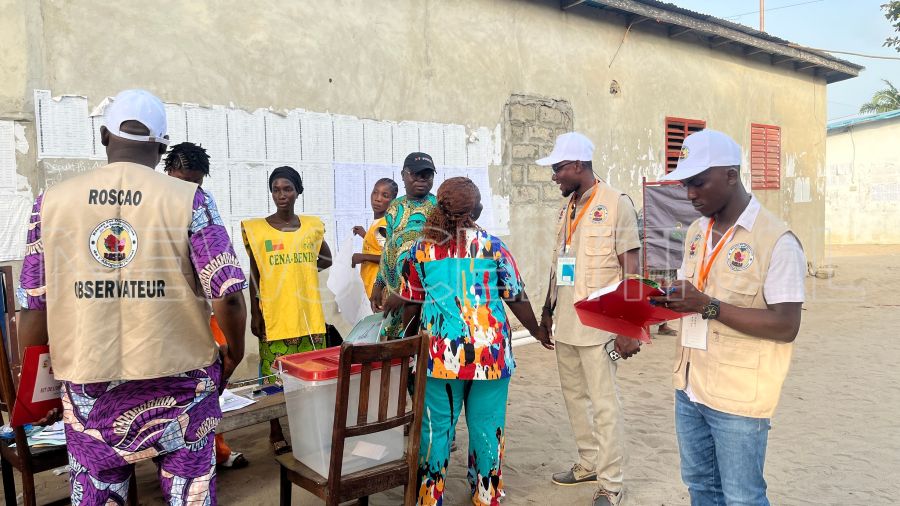
Election Observers in Cotonou Benin Republic
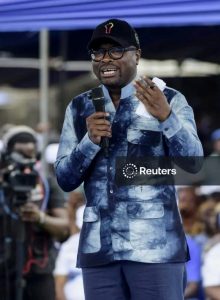
Romuald Wadagani Benin New President
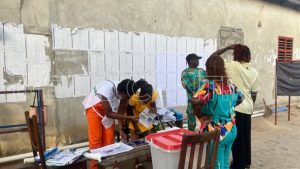
Romuald Wadagni has won the Benin Republic presidential election held on Sunday April 12th, 2026.
The Autonomous National Electoral Commission of Benin (CENA), announced the results within 28 hours
Ahead of the election hundreds gathered in Cotonou for last minute political rally from two presidential candidates – Paul Hounkpe and Romuald Wadagani .
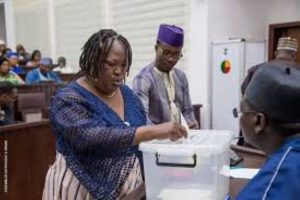
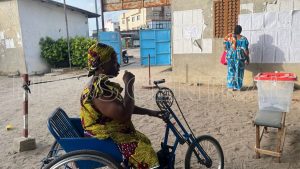
Paul Hounkpe, is leader of the opposition Forces Cauris for an Emerging Benin (FCBE),
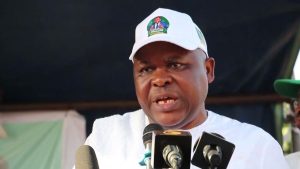
56-year-old Paul Hounkpe is running against Romuald Wadagni, the ruling camp’s candidate and current finance minister, in the April 12 presidential election. Outgoing President Patrice Talon is barred from seeking a third term under the constitution.
Two Horse Race
Romuald Wadagni, is Benin’s finance minister and the ruling party candidate for the presidential election.
Wadagni, who is backed by the two main parties making up the ruling bloc, has crisscrossed the country during the campaign.
Talon, 67, is barred under the constitution from standing again after two terms in power.
In 2024, the economy Benin Republic economy expanded by 7.5 percent, the highest since 1990, and growth is expected to average 7.1 percent over the period 2025-2027, according to the World Bank.
ECOWAS Monitors Election
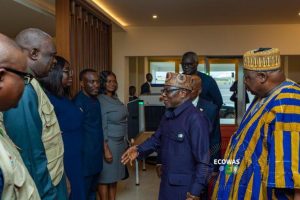
The Economic Community of West African States (ECOWAS) has deployed a Long-Term Election Observation Mission (LTEOM) in Benin Republic ahead of the country’s presidential election scheduled for April 12, 2026, as part of efforts to support a credible and peaceful electoral process.
The deployment was authorised by the President of the ECOWAS Commission, Omar Alieu Touray, in line with regional legal instruments guiding democratic governance and election monitoring within the West African bloc.
According to a statement issued by ECOWAS’ Directorate of Communication in Abuja, 15 election experts drawn from ECOWAS member states will remain in Benin Republic from March 22 to April 18, 2026, observing key phases of the electoral process before, during and after the polls.
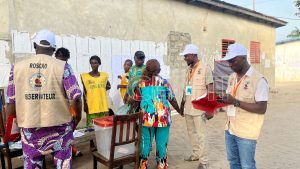
The observers possess expertise in constitutional law, diplomacy, electoral operations, political affairs, media, conflict prevention, gender and inclusion, and security, enabling them to conduct a comprehensive assessment of the electoral environment.
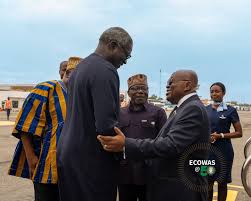
ECOWAS said the long-term observers will monitor developments across all regions of Benin, providing early analysis and recommendations aimed at preventing tensions and strengthening public confidence in the electoral process.
“Their analyses will serve as early-warning and rapid-response mechanisms to help prevent and manage any conflict linked to the elections,” the regional body said.
As part of the mission’s operational structure, ECOWAS will establish a situation room to track political and security developments nationwide and provide daily updates to the ECOWAS Commission. The mechanism will also support coordination ahead of the deployment of a Short-Term Election Observation Mission, which is expected to include about 100 observers closer to election day.
The mission is being deployed in line with key regional instruments including the 1993 Revised ECOWAS Treaty, the 1999 Mechanism for Conflict Prevention, Management and Resolution, and the 2001 Additional Protocol on Democracy and Good Governance, which guide the bloc’s role in supporting democratic processes across West Africa.
ECOWAS noted that the long-term observation mission follows a pre-election fact-finding mission that visited Benin Republic from January 7 to 17, 2026, where delegates engaged government officials, political parties, civil society organisations and the country’s electoral management body, the Autonomous National Electoral Commission of Benin (CENA).
The findings of that mission were submitted to the ECOWAS Commission to guide preparations for the broader observation effort.
By deploying the mission, ECOWAS said it was reaffirming its commitment to supporting transparent, credible and peaceful elections in Benin while promoting democracy, good governance, peace and stability across West Africa.
Founded in 1975, ECOWAS is a regional bloc of 12 member states, working to promote economic integration, political stability and development across the region.
The organisation also plays a key role in election observation, mediation and conflict prevention as part of its mandate to safeguard democratic governance in West Africa.
The Republic of Benin is a West Africa nation bordered by Togo, Nigeria, Burkina Faso and Niger Republic, with a southern coastline on the Gulf of Guinea. Formerly known as Dahomey and colonized by France, it gained independence on August 1, 1960. The capital is Porto-Novo, but Cotonou is the largest city and economic center.


- Geography: Features a flat southern coast, central plains, and the northern Atakora Mountains.
- Government: A democratic republic led by President Patrice Talon, with 42 distinct ethnic groups including Fon, Yoruba, and Bariba.
- Economy & Culture: Primarily agricultural (cotton, palm oil) with developing tourism. French is the official language, and the currency is the West African CFA franc
- Significant Sites: Known for the stilt village of Garvie and the Ouidah, a center of Voodoo history.
- Population: Approximately 11.7 million people.
- Capital: Porto-Novo.
- Largest City: Cotonou.
- Area: 112,622
- Currency: West African CFA franc (XOF).
- Main Resources: Cotton, palm oil, limestone, and small offshore oil deposits.
- Language: French (official).
- Religion: Indigenous beliefs (50%), Christian (30%), Muslim (20%).
- Culture & History
- History: Known as Dahomey until 1972, the region was a powerful kingdom before becoming a French colony.
- Democracy: Since 1990, it has maintained a relatively stable, peaceful multi-party democracy.
- Key Sites: Garvie, a, stilt village on Lake Nokoué; Pendjari National Park for wildlife.
Read More:
ECOWAS Deploys Election Monitors To Benin Republic
Nigeria ,Benin ,Burkina Faso -The Changing Security Dynamics in West Africa
Benin Republic Holds Presidential Election on April 12th
Source -/ Viory/Reuters/PR-ECOWAS/African News/Write Up
About the Author