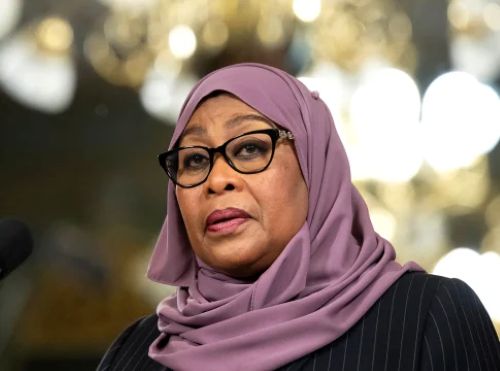
Professor Saheed Timehin

I woke up this morning in serious pains – pains that are not the results of physical assault, ailment, or accident; but rather, terrible mental agonies into which I was thrown since the past few weeks when I stumbled upon some videos on the social media orchestrating the misunderstanding that occurred between a revered Shaykh, the head of the most prestigious center of traditional Islamic learning in Yorubaland and a respected professor who, arguably, can be regarded as one of the best among us.
The misunderstanding, unfortunately, has degenerated into ego-driven sectarian clashes where the foot soldiers of the Shaykh and the passionate supporters of the professor have continued to engage in mutual mudslinging while the real victim caught in the crossfires of this saga is Islam itself and the sanctity of its teachings.
It is sad that we find ourselves today at a time when the name of Islam is too often spoken in the language of fear rather than hope, suspicion rather than trust, and division rather than dignity. Our religion which was meant to be a harbinger of love and peace has been distorted into a banner under which hatred marches with confidence.
The entire saga is obviously an offshoot of the animosities that existed between the traditional scholars of Islam and some of our Saudi-trained brothers.
The traditional scholars have been loosely distributed between a structure that is, and has always been an admixture of Sufi pietism, moderate reformism, modernist pragmatism and morbid syncretism; while the Saudi- trained brothers, uphold the Saudi Salafi puritanism which they have, in most cases, unwittingly presented as ideological totalitarianism.
Both camps, because of their different approaches and interests, have been engaged in ideological rifts some of which have littered the virtual space for some years now. It is against this background that the current crisis should be viewed.
In the whole saga, we are faced with one of the great lessons in the dynamics of human relations. It is human to err; it is human to correct; it is human to disagree, and it is also human to agree. From the labyrinth of these positions emerges one of the greatest attributes of man – peace-building, which in other words means resolving the conflicts created by these positions.
The revered professor, who had, ironically, been at the forefront of settling disputes, resolving crises, building bridges, and mending broken structures, suddenly fell into the pit of systemic psychosocial disruptions he had warned against. Being human, he made a mistake in his utterance.
Had he just disagreed with the Shaykh, the uproar wouldn’t have been as loud as this. He obviously forgot himself- that momentary period of forgetfulness that shuts one’s eyes to the larger picture – and in his disagreement with the Shaykh, he forgot the moral finesse he had preached to all; but despite this, does he deserve this outcry? No, he doesn’t.
Today, I do not wish to castigate the professor for making a mistake (he is human after all), and neither do I wish to pass judgment on the main thrust of the disagreement. I wish to appeal to his detractors to weigh his error on the scale of his antecedents which are mostly positive.
I appeal to all parties today not because we are the same but because we are ordained by Allah to be brothers; we share the same qiblah, recite the same Qur’an, and bear witness to follow the same Prophet (saw). Yet, despite this sacred unity, our Ummah bleeds – often not from the blows of its enemies but from wounds inflicted by its own hands.
Today, we must ask ourselves a difficult but necessary question:
How did Islam, a religion revealed as mercy become, in some of our spaces, a language of anger and resentment? How did our pulpits become platforms for hate speeches, and our gatherings theatres of libellous drivels?
Theologies of hate within the Ummah don’t usually present themselves as hatred. They arrive dressed in the garb of religious zeal, defending the faith, or protecting sound methodology. But when zeal is divorced from wisdom, it becomes destruction. When “defending Islam” requires humiliating Muslims, Islam itself is the casualty.
Allah enjoins us clearly:
ادْعُ إِلَىٰ سَبِيلِ رَبِّكَ بِالْحِكْمَةِ وَالْمَوْعِظَةِ الْحَسَنَةِ
“Call to the way of your Lord with wisdom and beautiful admonition” (Qur’an 16:125).
Wisdom is therefore not optional. It is a divine command. It is the essence of the message. It is what brings out the beauty of the message. It does not just teach the word, it knows the what, the why, and the how of the message. It addresses the content, the intent, and the context of the message, and knows when silence is golden.
It is wisdom that we understand that our Ummah was never meant to be monochrome. The Companions differed. The jurists differed. The scholars of jurisprudence institutionalized disagreement and called it rahmah (mercy). Imam Malik refused to impose his Muwaṭṭaʾ on the Ummah, saying:
“The companions of the Messenger of Allah dispersed across the lands with diverse views, and each possessed knowledge.”
Yet today, disagreement is often treated as deviation, and diversity is seen as danger. We label before we listen. We condemn before we understand. And in doing so, we forget that Allah alone judges hearts. We also take pride in Takfir (declaring fellow Muslims to be outside the fold of Islam), yet Takfir Is not strength; it Is poverty; it is a celebration of ignorance, and a validation of ideational arrogance.
The Prophet (saw) warned us:
“If a man says to his brother, ‘O disbeliever,’ then it returns upon one of them.” (Bukhari and Muslim)
This means that if a person declares a fellow Muslim to be a Kafir, one of them is the Kafir. If the person being labelled is not a Kafir in the sight of Allah, the person labelling him automatically becomes a Kafir. Takfir is thus not a sign of certainty; it is a sign of moral impatience. The early scholars feared it more than they wielded it. Today, we pronounce it faster than they pronounce salaam.
We see a lot of this everyday in our particular social universe in Southwest Nigeria, yet we claim to be scholars – students and teachers. We forget that if our theology does not portray the character of the Prophet (saw), it is not prophetic theology. We embrace the Prophet’s teachings about hijab, niqab, and other outer adornments but refuse to embrace his humanity, simplicity, tolerance, and spirit of accommodation.
Allah describes him:
وَمَا أَرْسَلْنَاكَ إِلَّا رَحْمَةً لِّلْعَالَمِينَ
“We sent you only as a mercy to all the worlds” (21:107).
He endured insult without vengeance, disagreement without excommunication, and opposition without hatred. Mercy was not his strategy; it was his nature. Tenderness was his garment, and empathy his disposition. Any form of Islam that cannot coexist with mercy has lost its way.
Extremism, fanaticism, and intolerance do not grow only because of loud voices, they grow because voices of reason remain silent. When balanced scholars avoid difficult conversations; when leaders fear losing followership, and when we outsource moral and religious education to social media, theologies of hate flourish unchecked.
Today, I urge you to refuse to be silent. Let’s reclaim the heart of the Ummah. We will not join the camps. We will call them to what is right. We will choose adab (good conduct) over ego,
dialogue over denunciation,
maqaasid (higher objectives of the Shariʿah) over narrow literalism, and true brotherhood over branding.
We will assert that our strength is not in shouting others down, but in lifting the Ummah up. Let us see this Jumu’ah as the beginning of an epoch and look ahead with a renewed covenant:
– To disagree without disrespect
– To correct without contempt
– To uphold truth without crushing mercy
The Ummah does not need more arguments; it needs more hearts softened by taqwā.
May Allah cleanse our tongues from cruelty, our hearts from arrogance, and our theology from hatred.
May He reunite this Ummah not in uniformity, but in compassion anchored in truth.
Timehin Saheed Olurotimi, a Professor Middle Eastern Studies @The Lagos State University of Lagos, LASU.Lagos State , Southwest Nigeria.
About the Author