Babafemi Ojodu@ Farm House

Babafemi Ojodu,CON
I have read with amusement, the vituperations of some idle urchins on social media. Each time I write something critical about their hirer, they sneer: “He said he was retiring to The Farm. Where is his farm?” Others mock: “Don’t mind him; it’s just his house on Iworoko Road, Ado Ekiti.”
They say this to ridicule, as though I have no right to christen my home whatever name pleases me. Yet, as Shakespeare reminds us, “A rose by any other name would smell as sweet.”
How It Began
In 2002, I lost my beloved mother. Out of grief and gratitude, I sought to create a personal sanctuary to honour her sacrifice. A quiet haven for reflection and remembrance. That was when I acquired ten acres on the outskirts of town and built a modest bungalow. Beside it stands the Raliat Ojudu Women Development Centre, named in her memory, and a large warehouse designed to train women in trades.
Those same facilities now hum with new life as the Adire Ekiti Hub, where the First Lady of Ekiti State, a proud daughter of our soil trains thousands of women in the ancient craft of adire. I like to think that my mother’s spirit smiles at this: women lifting one another through skill and purpose.
The Harmony of Nature and Nurture
The Farm is more than a name; it is a living space of growth, peace, and purposeful labour. Within its grounds, fish ponds yield enough for my table and for friends. Goats, turkeys, geese, ducks, guinea fowl, tortoises, and even snails roam freely. We even raise maggots. Yes, maggots, to feed the fish and for export. As Wendell Berry wrote, “The care of the earth is our most ancient and most worthy, and after all, our most pleasing responsibility.”
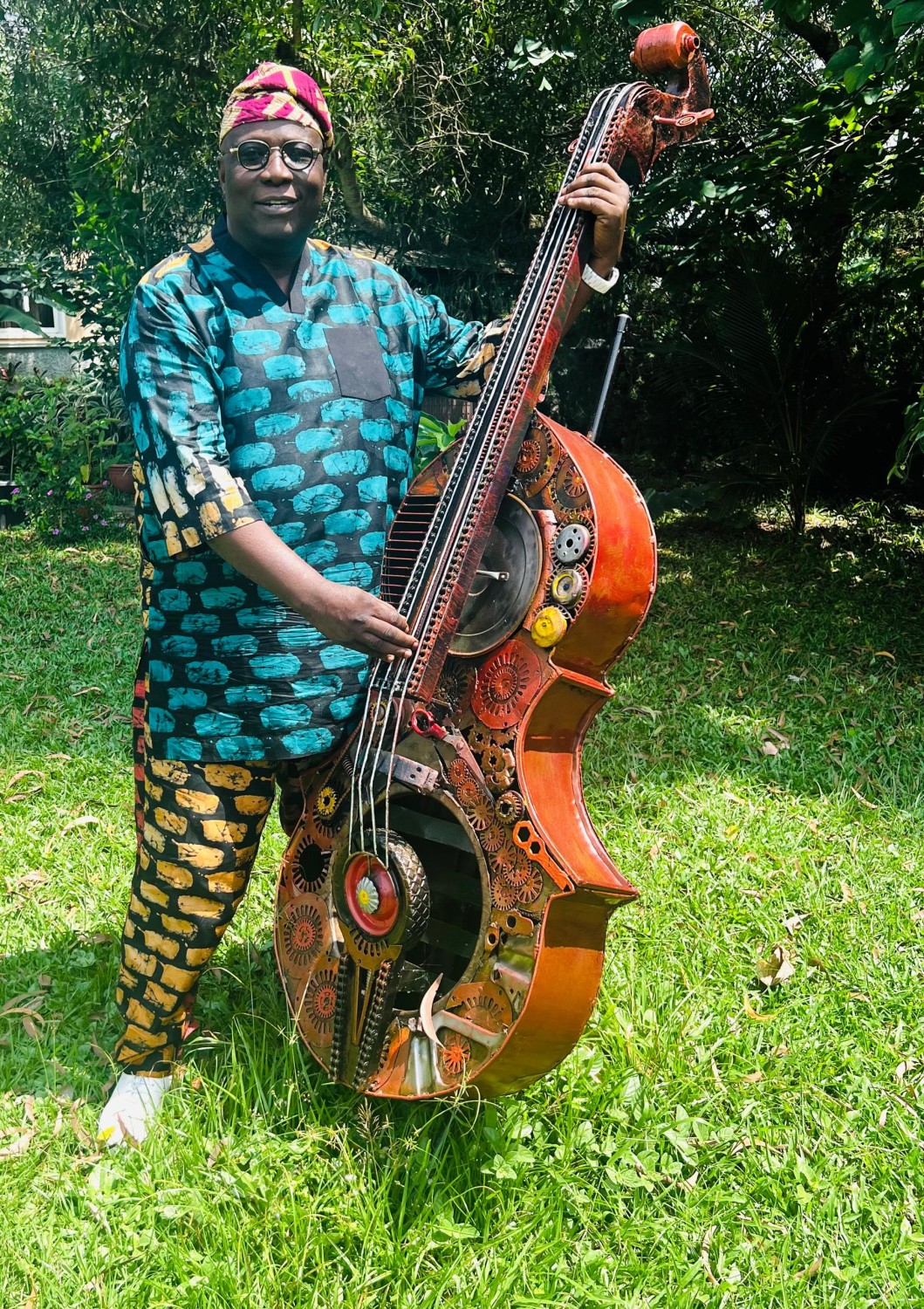
Beyond the animals and trees lie my treasures — thousands of books gathered over forty years, and hundreds of artworks collected across Nigeria and beyond. I would have had many more if not for the tragedy of 2009, when arsonists, driven by ignorance and envy firebombed the section of the compound housing my collection.
I lost irreplaceable pieces: Epa masks, giant sculptures from Cameroon and the Central African Republic, Egungun masks from Ekiti, ceremonial drums, and intricate carvings. To fools, they were the source of my “power.” To me, they were the em9bodiment of our culture’s soul. But as Victor Hugo wrote, “You can destroy the flowers, but you cannot prevent the coming of spring.” I have since rebuilt and resumed collecting, for beauty must always rise from ashes.

A Home for Minds and Spirits
The Farm has evolved into a sanctuary of the arts, books, and nature. Here, members of the Ekiti Book Club and the Association of Nigerian Authors gather monthly to read, debate, and find peace. We have begun an Art Residency, and already nine young artists, eight men and one woman have spent time here painting, sculpting, and restoring art. Children and their parents have come on occasion to learn the delicate art of brush and canvas.
Usman, a 21-year-old sculptor, is about to complete a huge sculpture of Wole Soyinka, after finishing a 12-foot-high cement figure of The Freedom Man.
We have hosted celebrations of remarkable lives, from our unforgettable Wole Soyinka Birthday Tribute to the Onidiri Festival on October 1st, when young men and women revived the ancient Yoruba art of hair weaving. On that same day, over fifty professional women picnicked on the lawns, their laughter mingling with the rustle of trees. It was a scene of joy, creativity, and rebirth, exactly what The Farm stands for.

The Farm welcomes everyone: people of different persuasions, faiths, and politics. On my 63rd birthday, I brought in masquerades from across the state to perform. My bosom friend, Ogun Ojo, came with fifty Orisa worshippers to pray for me. I have hosted more than twenty Alasalatu — a prayer group of Muslim devotees who sang, prayed, and dined. Aladura worshippers have come too. I am even editing a book titled Yoruba Gods of Ekiti Native.
Distinguished visitors like Chief (Mrs.) Nike Okundaye of Nike Art Gallery, Prince Yemisi Shyllon, Africa’s foremost art collector, Tola Wewe, Dotun Popoola, and Toyeeb the recycled tire sculptor have all been here.
The humility-personified Governor of Ekiti State, Biodun Abayomi Oyebanji, whose listening ear is unmatched, drops in occasionally to exchange ideas. Recently, Omoyele Sowore, the irrepressible rebel, stopped by, and we shared laughter and reflections. Two weeks ago, my longtime friend and comrade Ogbeni Rauf Aregbesola, who recently left our party (APC) for the ADC, called to say he would stop by after an official engagement, but urgent matters took him away. Members of my party also visit frequently to discuss politics, pleading with me to return to Abuja. “Not for your sake, but for ours,” they say. I smile.
Artists, actors, academics, hikers, adventurers, and nature lovers drop by from time to time to experience this place where the mind finds soil. What is not welcome here are intrigues and the snake venom that characterizes competitive politics in our clime.


A Life of Bliss and Purpose
Since 2023, The Farm has been my full-time abode; a place where I grow plants and people, where I mentor, write, and dream. I have published a book here, The Adventures of a Guerrilla Journalist, and I am working on others, including a volume of poems titled Laughing at Power, to be released next year. Young and ambitious creatives meet here regularly, and I have nudged them into forming a cooperative to finance their projects.
The serenity of The Farm allows me to reflect and, yes, to engage responsibly in national discourse. That, of course, irks the data boys, those anonymous warriors who think being on a farm means abandoning one’s country. But as John Steinbeck wrote in The Grapes of Wrath, “Wherever there’s a fight so hungry people can eat, I’ll be there.” I have fought for Nigeria, suffered for her, and will never forsake her.

Failing to Conform?
So if I fail to conform to what others think I should be, I offer no apologies. Here, at The Farm, far from the noise and malice of the world, I have found peace: in art, in books, in the rustle of trees, in the laughter of visitors, and in the quiet growth of fish and flowers.
This is The Farm, a republic of rebirth and reflection, where words, ideas, and seedlings grow side by side.
As I often remind my guests: “He who plants a tree, plants hope.”
This Piece was written by Babafemi Ojudu,CON.
Read More :
The Tragedy Of Brilliance – Babafemi Ojodu
https://www.linkedin.com/pulse/quiet-republic-farm-senator-babafemi-ojudu-con-dexmc/
FAO champions Nigeria South South Cooperation
About the Author