DRC-Rwanda PEACE agreement
DRC-Rwanda PEACE agreement
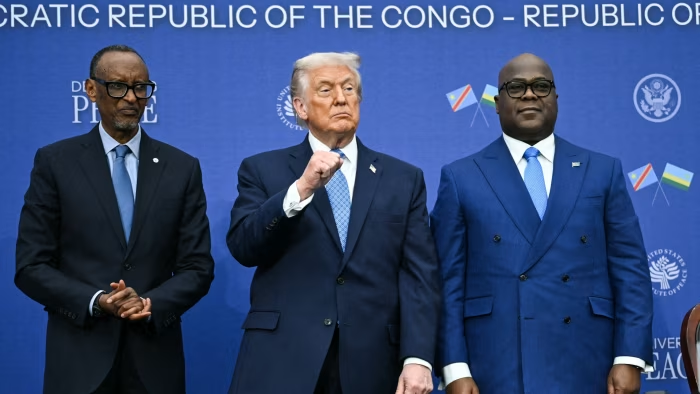
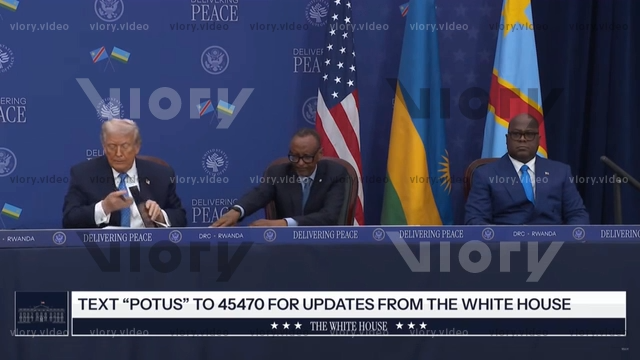
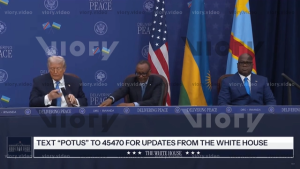
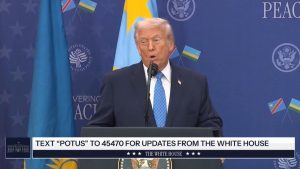
The Democratic Republic of Congo, DRC President Felix Tshisekedi and Rwandan President Paul Kagame have signed peace and economic accord in the US at the instance of President Donald Trump, at the newly named ‘Donald J Trump Institute of Peace’.
A Turning Point
The US President hailed the agreement while the DRC leader noted that, the day was a ‘turning point’
“I do believe this day is the beginning of a new path, a demanding path, yes indeed, quite difficult, but this is a path where peace will not just be a wish, an aspiration, but a turning point,” Felix Tshisekedi stated.
Rwanda’s Paul Kagame said
“No one was asking President Trump to take up this task. Our region is far from the headlines, but when the president saw the opportunity to contribute to peace, he immediately took it. He immediately took it,”
The deal itself was signed by foreign ministers of each country in June, while both accused the other of breaking the terms. It comes amid fighting between government forces and militants which the DRC claims are backed by Rwanda – and which Kigali strongly denies.
Increase Trade between DRC, Rwanda and Washington
The agreement covers the peace deal and an ‘economic agreement’ which Trump says will increase trade between both of them and Washington.
Donald Trump called it a ‘great day for Africa’ and a ‘great day for the world’ as he addressed the signing ceremony for the DRC-Rwanda peace and economic agreement.
The agreement covers the peace deal and an ‘economic agreement’ which Trump says will increase trade between both of them and Washington.
Not ‘Materials-For-Security’ Exchange
Democratic Republic of Congo (DRC) officials have rejected claims that the country’s newly signed accords with Rwanda and the United States amount to a ‘materials-for-security’ exchange, stressing that the agreements form part of a broader push to secure peace and advance regional integration.
The comments came after the signing of the Washington Accords for Peace and Prosperity between the Democratic Republic of the Congo (DRC) and the Republic of Rwanda, hosted by US President Donald Trump in Washington, DC.
“These agreements, in fact, endorse three important documents, namely the declaration of principle initially signed on April 25, followed by the peace agreement signed between the Democratic Republic of Congo and Rwanda on June 27, and the regional economic integration framework signed today, December 4,” explained Congolese Foreign Minister Therese Kayikwamba Wagner after the signing of the Washington Accords.
She said the instruments reflect “a long march… a long sequence of diplomatic efforts,” noting that US engagement had been central to advancing the process.
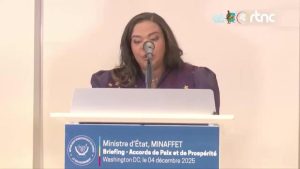
The aim, she added, is to lay the foundations for “a lasting peace, in the eastern Democratic Republic of Congo, but also in the wider Great Lakes region,” while opening the way for reconciliation and “greater economic integration.”
Deputy PM Pushed Back
Deputy Prime Minister Daniel Mukoko Samba underlined that key provisions hinge on security improvements and Rwanda’s compliance with previous commitments.
“For this to take effect, the conditions must first be met. The elements of security, restoration of peace, restoration of the State, and the Authority of the Congolese State throughout the national territory… In other words, the withdrawal of Rwandan troops from our territory. In other words, an end to support for the M23 and other non-state armed groups. These are the permissive conditions for this regional NOMIC economic integration framework to take shape,” Mukoko Samba said.
The Deputy PM pushed back against accusations that Kinshasa had traded access to minerals for US security guarantees.
“Public opinion has simplistically presented this as a barter, as an EU raw materials-for-security deal. No, that’s not the case,” he said.
The Washington Accords come amid persistent instability in eastern DRC, where Congolese forces have long battled the M23 rebel movement, which Kinshasa says is backed by Rwanda – an allegation Kigali denies.
Officials said the new agreements aim to create political, economic and security conditions that could move the region toward lasting stability.
READ AND WATCH MORE
Africa’s Moment: From Dialogue to Real Conversion
Source :Viory
About the Author