U-17 WORLD CUP Trophy with Oluebube-Umejiaku
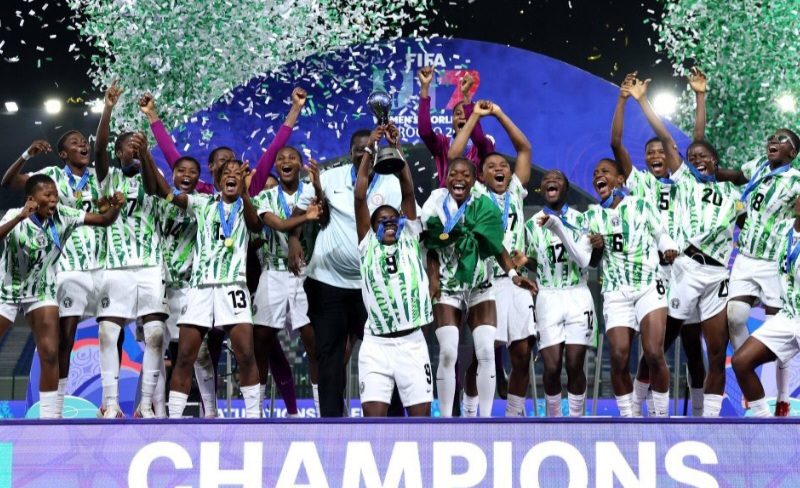
Nigeria has once again demonstrated its capacity to excel on the global stage as the country’s Under-17 women’s national football team, the Flamingos, made history by winning the 2026 FIFA U-17 Women’s World Cup in Morocco. In a thrilling final, the Nigerian girls defeated Japan 2–1 to claim the country’s first-ever title in the competition, becoming the first African nation to achieve the feat.
The historic victory has attracted widespread celebrations across Nigeria and the African continent, with President Bola Tinubu describing the triumph as a landmark achievement and a source of national pride. Beyond the trophy, however, the victory represents a significant milestone in the development of women’s football and provides further evidence of Africa’s growing influence in international sports.
The Flamingos’ journey to the summit was characterised by resilience, determination and tactical discipline. Following an opening setback against Poland, the team recovered with a 2–0 victory over Puerto Rico before defeating defending champions North Korea 3–1.

In the quarter-finals, Nigeria secured a hard-fought 1–0 victory over Venezuela through a late penalty in the 89th minute. The team subsequently overcame Brazil 3–1 in the semi-finals, setting up a decisive encounter with Japan.
In the final, Awawu Bashiru opened the scoring in the 39th minute, while Oluebube Umejiaku extended Nigeria’s lead in the 47th minute. Their goals proved decisive as the Flamingos held on to secure a memorable 2–1 victory.
Under the technical guidance of Coach Akeem Busari, the young Nigerians displayed remarkable composure, teamwork and tactical awareness. Their performance has reinforced Nigeria’s reputation as a major force in African women’s football, a tradition sustained over the years by the Super Falcons.
More importantly, this achievement demonstrates the remarkable possibilities that can emerge when young people are given the opportunity, encouragement and support to develop their talents. It also provides an opportunity to examine how government policies on youth empowerment and sports development can be translated into tangible results.
The victory is particularly significant for the Nigerian girl-child. It sends a powerful message that girls, when given equal opportunities and the necessary support, can overcome barriers and compete successfully at the highest level. The Flamingos have consequently become inspiring role models for millions of aspiring female athletes across the country.
However, sustaining this historic achievement requires more than celebrations, presidential commendations and public recognition. The real test lies in whether Nigeria can build on this success through deliberate and consistent investment in grassroots sports development.
The Federal Ministry of Sports Development, the Nigeria Football Federation and other relevant stakeholders must strengthen talent identification programmes, improve sporting facilities, provide professional coaching and ensure sustained investment in female football.
There is also an urgent need to strengthen domestic women’s football leagues, identify emerging talents in rural communities and provide young athletes with the technical, educational and financial support required to fulfil their potential.
Furthermore, the Federal Government’s commitment to youth empowerment and sports development must translate into practical policies that create opportunities for young athletes beyond international competitions. Such investment would not only improve Nigeria’s performance in global tournaments but also promote social inclusion, national unity and economic opportunities.
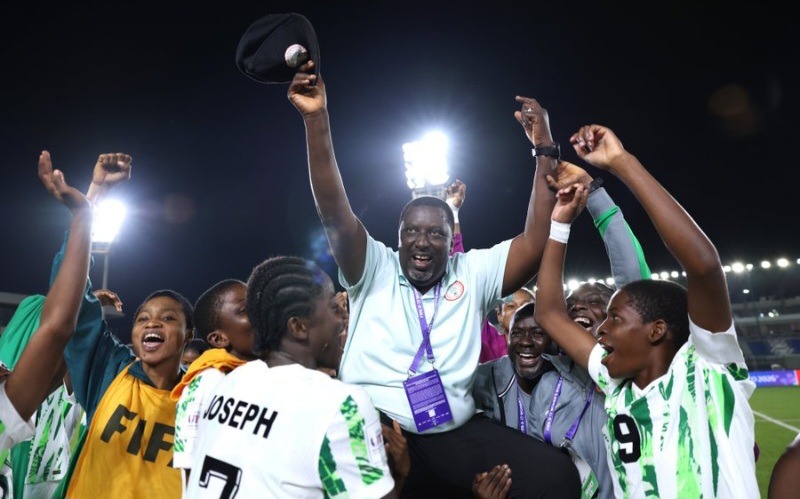
Nigeria’s historic victory in Morocco is therefore much more than a football achievement. It is a celebration of national pride, the potential of the Nigerian girl-child and the power of determination.
The flamingos have shown that Nigerian talent can conquer the world. The responsibility now rests with the government, football administrators and other stakeholders to ensure that this triumph becomes the beginning of a sustainable success story for women’s football in Nigeria and across Africa.
This News Commentary was written by Yinka Otoki, Head Of News, Voice of Nigeria.
Source: VON
About the Author